beyoungd-asia.com

Cutting-edge information

Biotechnology

Cognitive Science

Public Health

Bioethics

Hot Topics

Topic: How the brain rapidly forms environmental knowledge, by Nature 2025

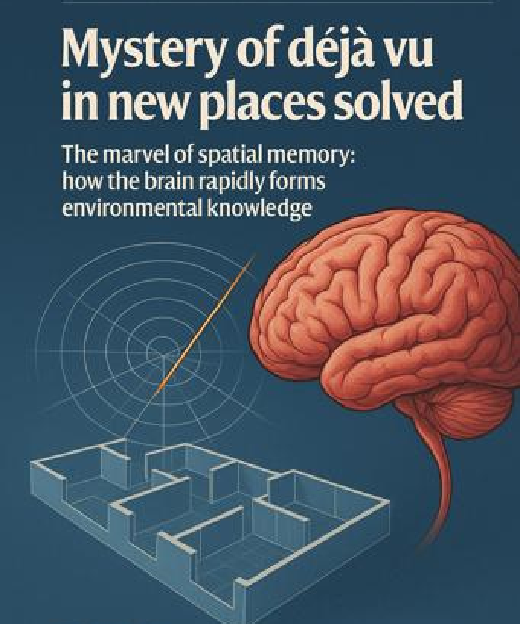
When you enter a new place, like a shopping mall, but feel like you’ve been there before, it’s not just your imagination. Scientists at the Norwegian University of Science and Technology have discovered a special system in the brain that quickly builds a mental “map” of new environments. Using advanced Neuropixels technology, they studied rats and found that, when entering a new space, the brain’s cells rapidly scan left and right (about 24 degrees each way, 8-10 times per second). This system can even “see” and remember spaces behind walls that aren’t visible.

What’s more, this scanning system keeps working even during REM sleep, helping your brain create dream worlds of places you’ve never really visited. This discovery helps explain why new places sometimes seem familiar and could change how we understand memory, with possible new ways to treat diseases like Alzheimer’s. The brain’s space mapping system acts like a tireless explorer, always drawing a map of the world for us, both awake and asleep.

AI drew based on “Left-right –alternation theta sweeps in entorhinal-hippocampal maps of space”. Nature 2025

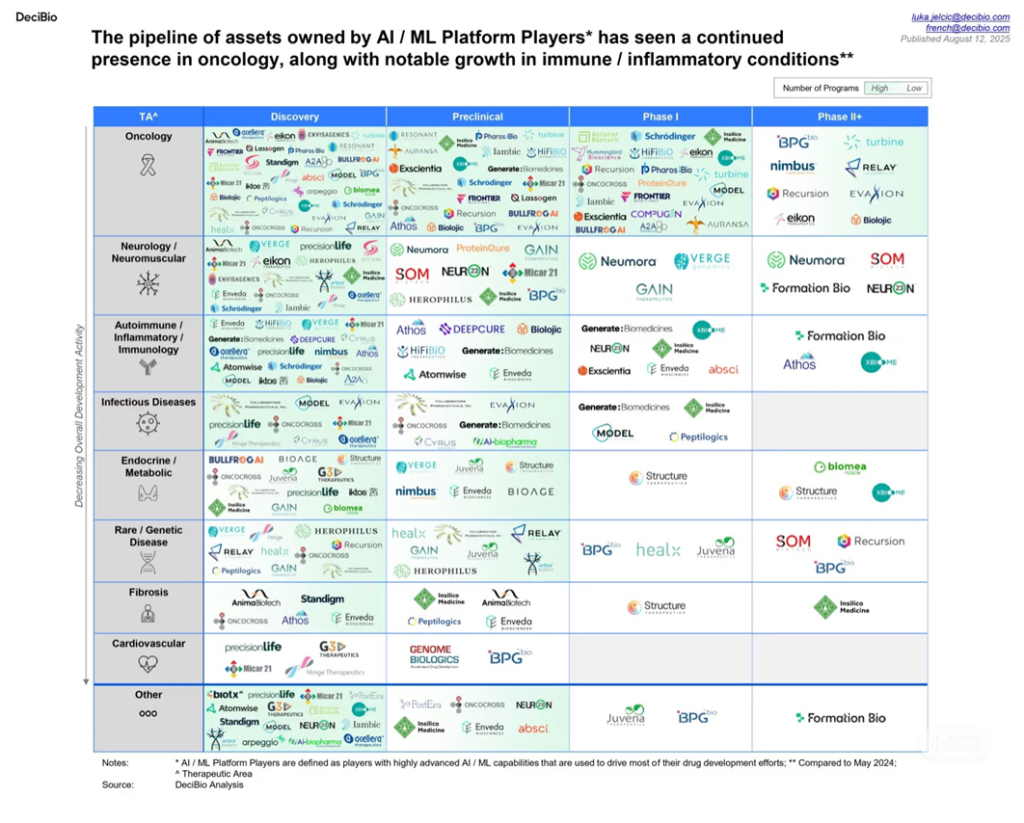
Source: DeciBio Analysis

Topic: Roadmap of AI-driven projects and pipelines

This report organizes the projects of AI-driven pharma companies by therapeutic area (like oncology or immunology) and R&D stage (from early discovery to clinical phase II). Most companies are still stuck in the lab (discovery or preclinical), and very few projects have reached human clinical trials. Whether AI’s promise will be fulfilled depends on who can successfully cross this critical clinical boundary.

Oncology is the Most Crowded Battleground, attracting the largest number of companies at every stage from early discovery to phase II trials. Immune/Inflammatory Diseases is the Next Golden Track. The report highlights immune and inflammation-related diseases as the fastest-growing target. Neuroscience, historically tough for big pharma, are now key targets for AI companies. 

Over the next 2-3 years, we are likely to see the first AI-discovered drugs approved for market. Companies advancing to phase II and beyond (such as Formation Bio, Recursion, and Insilico Medicine) have a clear head start. This is not just a triumph of technology but also of capital, talent, and strategic execution.


Topic: “The Key to Boys’ Success Is Winning at the Starting Line” by Science

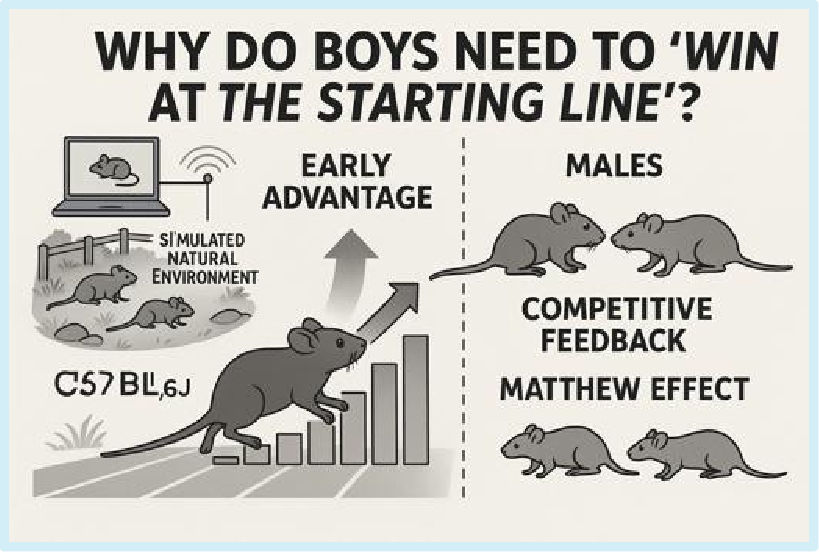
A recent study published in Science uncovers the crucial role of early advantage in male success, using male mice as a model. The findings reveal that competition among male mice for territory and resources begins early. Those that secure territorial advantages in their youth enjoy accelerating benefits over time, leading to a self-reinforcing cycle of success.

Computer simulations showed that this feedback mechanism is critical—minor early differences in weight or activity among males become amplified through ongoing competition, much like the “Matthew Effect” in human society (“the rich get richer”). This biological insight parallels societal observations: early opportunities and advantages can profoundly shape future outcomes. For “boys”—and by analogy, for young people striving for success—the research implies that taking initiative and capitalizing on early chances can have long-term impacts, turning brief opportunities into lasting strengths.

AI drew based on “Competitive social feedback amplifies the role of early life contingency in male mice”. Science 2025